Chapter 4
The first sixty minutes
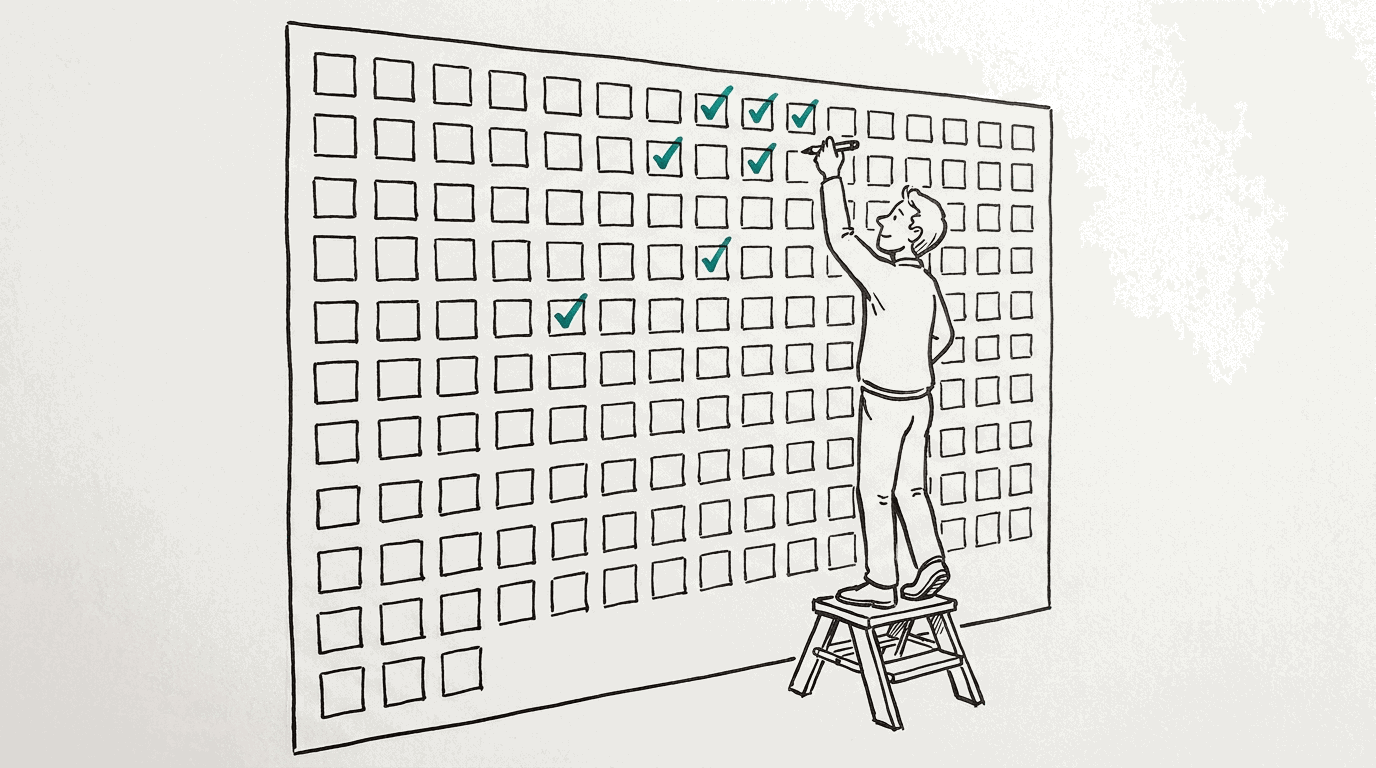
Sam sits at the kitchen table with a diary, a pen, and a twenty-minute timer on his phone. Five years of emergency care are in that diary, in fragments, and he has never once tried to write them all down in one sitting.
This chapter is that sitting. One hour, four moves, and the inventory has started before a single page of guidance has been read.
- one folder called ePortfolio, ready to receive everything;
- a brain-dump page covering the last five years, written in one sitting;
- that page held against the categories in chapter 5, with the filled boxes marked;
- the first three rows of your join document, each with a working title and a source.
The ritual
Do not read the guidance yet. Your first hour looks like this:
- Make one folder called ePortfolio. It becomes the single home for everything that follows.
- Set a twenty-minute timer and brain-dump the last five years. Roles, projects, audits, teaching, feedback, committees: write everything you can recall, without judging any of it.
- Hold the page against the categories in chapter 5. Mark the boxes your five years already fill.
- Pick your first three items. Give each a working title and put it on the join document.
You have started, and it cost one hour.
Where the memories live
- Diaries and calendars. Five years of entries are a factual skeleton of your working life. Read them through once and let each entry wake the memory that sits beside it.
- Prompted memory. Walk your own timeline ward by ward and post by post. At each stop, ask what you changed, taught, fixed or led.
- Colleagues. Ask them what they remember you doing. Other people hold half your evidence, and they will name things you have forgotten.
- Inboxes and shared drives. Search your name and your project names. The dated replies you find are evidence that you were there and did it.
Write everything down. Memory alone is not an inventory.
One home for everything
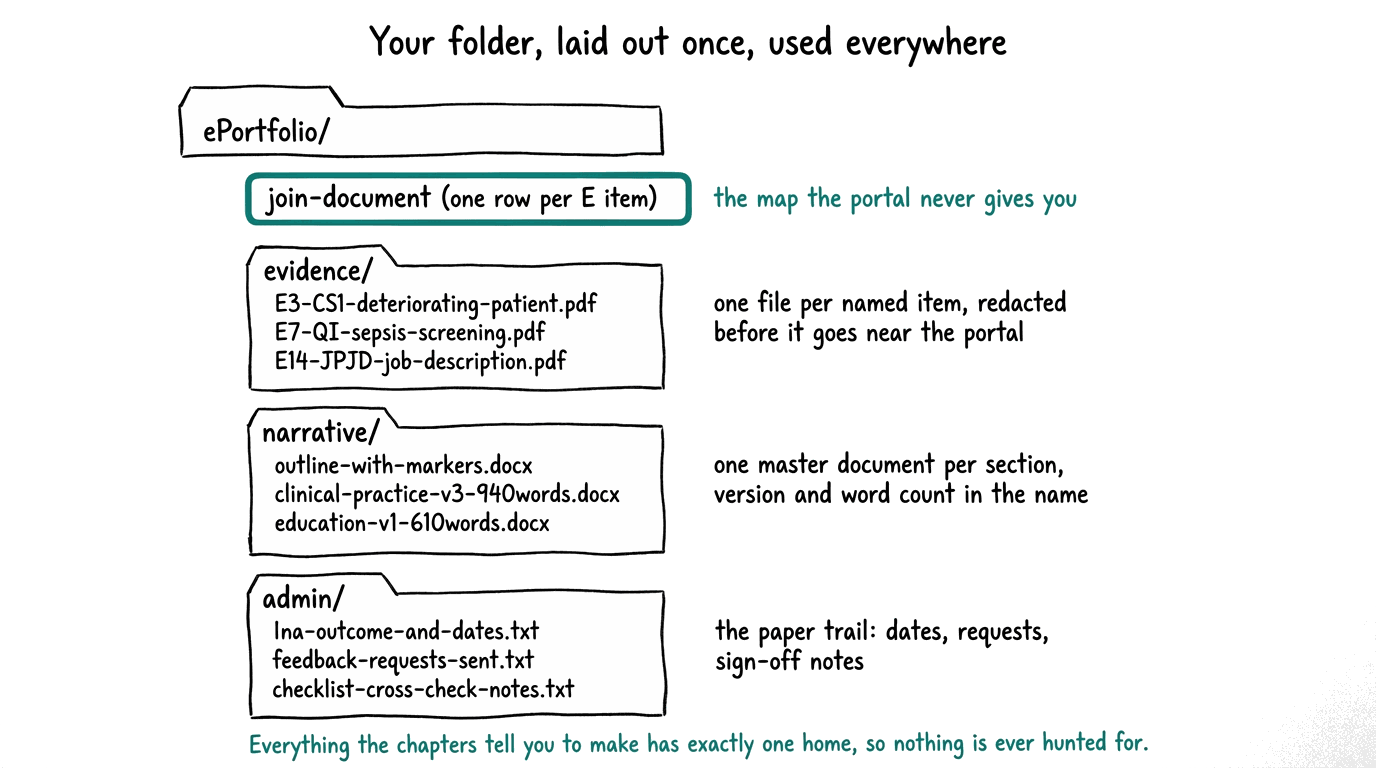
Give every file one home as it arrives, using the layout above. The join document sits at the top because it is the map. Named, redacted documents go straight into evidence. Your per-section master documents, named with version and word count, live in narrative.
Dates, requests and sign-off notes go into admin. Five seconds of filing per document now buys you back whole evenings of hunting later.
The join document begins
The join document is one table, one row per item, and it grows a column at every later stage. Chapter 3 opened it; the first sixty minutes put its first real rows in. Working title, category, and where the item came back from are enough for now.
| Row | Working title | Category | Where it came back from |
|---|---|---|---|
| E3 | CS1: Managing an undifferentiated deteriorating patient | Reflective case study | Own memory, confirmed by a debrief email |
| E7 | QI: Sepsis screening improvement project | Audit and quality improvement | The QI lead's shared drive and a colleague's memory |
| E11 | FB: Multidisciplinary colleague feedback | Colleague feedback | A 2024 diary entry naming the feedback round |
| E14 | JP/JD: Advanced practitioner job description | Job description | The HR file for the current post |
The rows are synthetic, like all the examples in this book; copy the shape, not the content.
- The mistake. Trusting your memory to hold the inventory, or leaving the hunt for files until the end.
- What goes wrong. What you did not write down in the hour is quietly gone, and the brain-dump thins with every week. The deferred file hunt then lands at the worst possible moment, late in the process, when drives have been archived and old colleagues have moved on.
- Do this instead. Write every item down during the gathering hour, however small, and pull each file into your ePortfolio folder while you are finding it. If a file will not turn up, put it on the gathering list with a date instead of trusting yourself to remember.
Put a date on your gathering list the day you write it. A list with a closing date is a task you can finish; a list without one becomes a background worry that runs for months. When the date arrives, stop on purpose and look at what is still empty.
Sam Archer set the timer at six in the evening and wrote until it rang. The page came back fuller than he expected: roles he had half forgotten, a sepsis audit, two teaching sessions, a feedback round he organised, a guideline rewrite. Held against the categories, more boxes took a mark than he had dared to hope, and the folder on his desktop is now called ePortfolio, with his first three rows already in the join document. His next question is the naming one: what does each of these items count as?
- one folder called ePortfolio exists on your machine, with the join document at its top;
- the brain-dump page covers five years, written in one sitting;
- every line on the page is marked against a category from chapter 5, or set aside as unclear;
- the join document has its first three rows, each with a working title and a source.