Chapter 2
Not an exam, and it is
Sam Archer hears the word portfolio and does what he did before exams at university: he opens the framework PDF after midnight and starts re-reading it, as if something will be tested. He highlights capabilities. He rereads the pillars. His tea goes cold beside the laptop.
Nobody is coming to test him. There is no exam hall, no invigilator, no grade for what he can recall on the day. This chapter is about putting the highlighter down.
- put down the highlighter: nothing here tests what you know;
- seen the backwards chain, nine steps from raw inventory to the frozen submission;
- seen what the order saves, and where the wasted four fifths goes;
- placed one real capability tick instead of an evening of studying.
Nobody is coming to test you
The ePortfolio route is not a knowledge test. There is no paper that grades what you know, no examiner probing your recall. It is an assembly job: five years of work you have already done, organised into one readable submission.
What shows in the portfolio is judgement, and your judgement is already in the material. It shows in selection and framing: which items you choose, how you name them, which capabilities you tick, how the narrative joins them up. You cannot revise for that the night before, and you do not need to. You have been building it your whole career.
The fog was the problem, not the work
The work itself was never the frightening part. Sam has five years of emergency care behind him and more material than he thinks. What scattered him was the fog around the work: menus that hide the object, guidance that arrives in the wrong order, and the suspicion that he should be studying. Clear the fog and the work is finite, and most of it is already done. So before anything else, give yourself permission to skip:
- Do not read all the official guidance before starting; the chapters tell you exactly which page matters and when.
- Do not write any narrative prose before your evidence is uploaded and named, because prose written first gets thrown away.
- Do not polish anything until the whole skeleton exists.
- Do not collect new evidence until chapter 5 shows you a real gap.
- And do not ask a chatbot to write your narrative: NHS England forbids it, and it flattens the one thing the assessors are reading for, your own judgement.
Why backwards
The submission freezes the portfolio. From the moment it is submitted the portfolio cannot be edited, so the end state is fixed and knowable. That is rare and precious: most large writing tasks have a moving target, and this one does not. So we start at the freeze and walk backwards, asking at each step what the next object up demands.
The checklist demands certain categories of evidence, so the inventory comes before any writing. Naming comes before citation, because a marker is a reference to a name. Capability ticks come before the pillar story, because the pillar columns are numbered. The outline comes before prose, because the word budgets and marker positions are the mould the prose is poured into. Nine steps, bottom to top, and each one removes a choice rather than adding one.
flowchart BT
  A["1 Raw inventory: what five years holds"] --> B["2 Name items: E n, CODE, title"]
  B --> C["3 Upload; tick capabilities on each item"]
  C --> D["4 Pillar plan: 4 to 6 items per pillar"]
  D --> E["5 Outline: budgets and marker placement"]
  E --> F["6 Write prose, section by section"]
  F --> G["7 Wire links; reconcile the Evidence List"]
  G --> H["8 Checklist: allocate evidence to 23 rows"]
  H --> I["9 Declaration and supervisor sign-off"]
  I --> J["The frozen submission: what they read"]
  style J stroke:#0d8377,stroke-width:2px
What this order saves
Applicants who work through the portal in menu order spend four to five times the effort this book asks for, and the extra four fifths is panic: prose rewritten, files renamed, capabilities re-ticked, lists reconciled that were never joined. Working backwards removes almost all of it:
- nothing is written twice, because nothing is written until the thing that cites it already exists;
- one join document replaces reconciliation panic at the end;
- feedback requests sent in week one turn the longest waits into background time.
The order is the method, and it is short enough to remember.
- The mistake. Starting by writing the narrative, because it is the biggest thing and it feels like the real work.
- What goes wrong. Prose written first cites evidence that does not exist yet, uses markers that do not match any record, and drifts away from the capability ticks when those are added later. Then it is rewritten. Often twice.
- Do this instead. Work in the order of the chain. The narrative is step 6 of 9. By the time you write a sentence, every fact it can cite already exists and has a stable name, so the prose can only fit the facts, never fight them.
If you feel the urge to study the framework, set a twenty minute timer and tick capabilities against one evidence item instead. Studying feels productive; placing one tick is productive, and it gives chapter 6 a first row to start from.
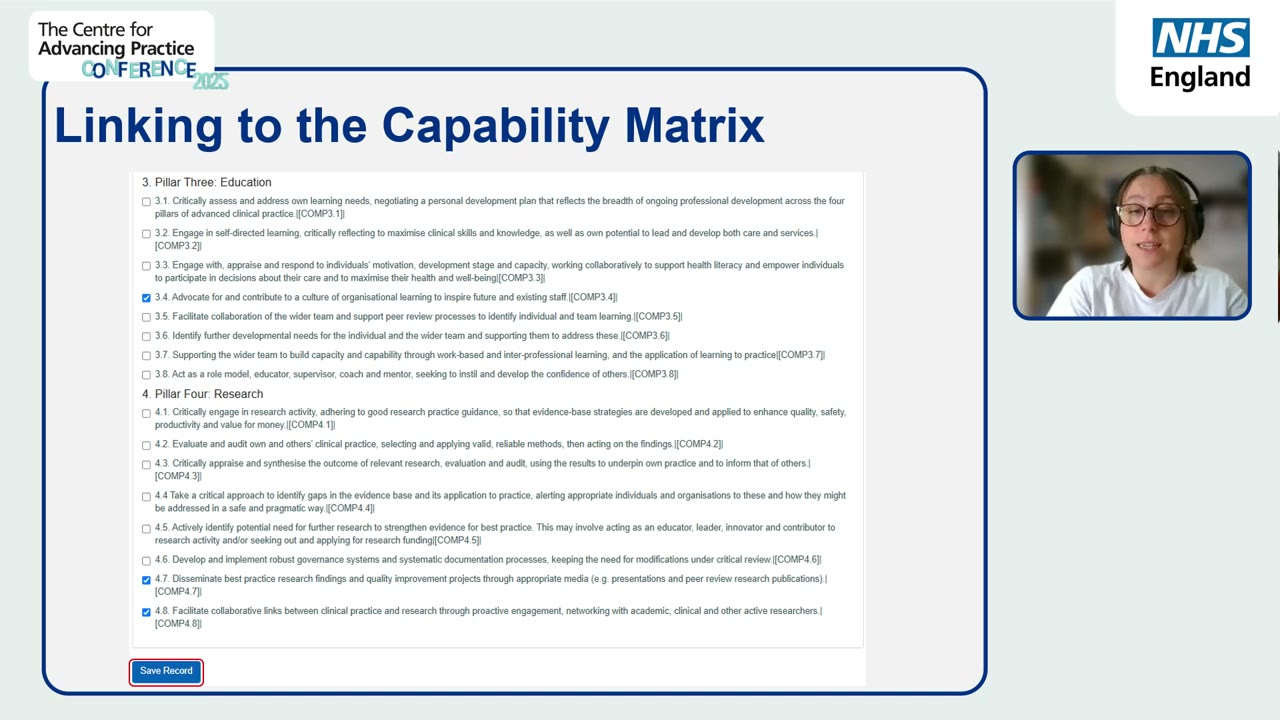
Sam Archer came to this chapter with a highlighter in his hand, half convinced something would be tested. He leaves it with the highlighter down: nobody is coming to test him, the portfolio is an assembly, and the assembly has a fixed order. His next worry is orientation: fine, but where does any of this actually live in the portal?
- you can say in one sentence why nobody is coming to test you;
- you can recite the nine steps of the backwards chain in order;
- you know which of the five permissions to skip tempts you most, and why taking it is the expensive choice;
- one evidence item carries at least one real capability tick.